


The DC Comics universe in film and television is, once again, in disarray. DC Studios co-heads James Gunn and Peter Safran are out, now replaced by former Marvel executive Jeremy Latcham. Many believed that once the Skydance/Warner Bros. merger happened, Gunn and Safran would be out. Yet reports in the last month suggested that Skydance was very on board with their ten-year plan, and the duo would stay. We don’t 100% know what happened since then. But hiring yet another person associated with Marvel follows a pattern DC has been doing for nearly 50 years. They’re always chasing Marvel’s success. And it’s only ever worked once. That was in the comics. But to understand that, we have to go back to the beginning.
DC Is an Accidental Shared Universe, Unlike Marvel

Unlike Marvel, the DC Universe was always an accidental one. One publisher, National Periodical Publications, launched Superman to spectacular success in 1938, then Batman a year later. And later, of course, several other iconic characters. But National, a.k.a. DC, didn’t think to unite Superman and Batman in a story for 12 years. Wonder Woman, who was part of the Justice Society, an early attempt at creating a shared universe to an extent, didn’t really meet Clark and Bruce on a regular basis until the first Justice League story in 1960. That’s nearly 20 years after DC introduced her. Creating a shared universe with a consistent mythology just wasn’t on DC’s to-do list.

Then, Stan Lee and Jack Kirby introduced the Fantastic Four in 1961, and everything changed for comics. Marvel was created to be a universe, and all the early creations like Spider-Man, Thor, and the X-Men were designed to coexist. Marvel wasted no time in “building a universe.” Meanwhile, at DC, aside from Justice League of America and World’s Finest, the average reader barely knew these characters shared a universe. When Marvel began to trounce DC in sales in the ’70s and ’80s, DC decided that it was time to really go the Marvel route. That first time, it worked.
DC Comics Began to Mimic Marvel 40 Years Ago, and They Keep Doing It

After suffering in sales for years, DC rebooted their entire universe in 1985 with Crisis on Infinite Earths. After that line-wide event, they hired some of Marvel’s biggest creators. Names like Frank Miller, John Byrne, and Alan Moore effectively reinvigorated their characters. This “Marvelization” led to some of the greatest stories in comics. The universe became far more connected, just like Marvel’s. After readers relegated DC to “your grandpa’s comics” for years, DC became a hot brand again, with sales to match.
DC wasn’t quite beating Marvel in sales, but they were competitive at least. But there came a point where DC was trying too hard to be Marvel, forgetting that all their comics needed to have individual tones and voices. In comics, they stopped trying so hard to mimic their biggest competitor. They leaned into their own history of different tones for different comics. But when it comes to movies? All they want is a taste of Marvel’s cinematic success. And so far, they’ve never pulled it off.
Warner Bros. Has Been Trying to Mimic Marvel’s Success On Screen for Decades Now
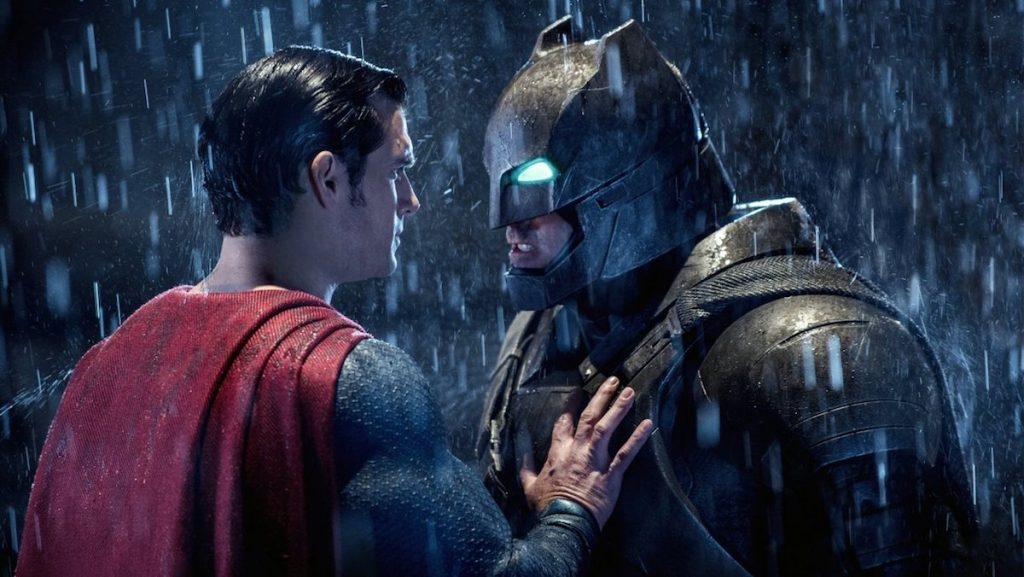
Cut to the 21st century. Marvel became the biggest name in Hollywood thanks to the success of the X-Men and Spider-Man franchises, and then the MCU. Ever since, Warner Bros. has been trying to mimic what made Marvel work so well on screen. As soon as The Avengers became a monster hit, DC tried to turn the sequel to Man of Steel into a big team-up film with Batman, jumping the gun on a shared cinematic universe after just one movie. They started DC Films with comics writer Geoff Johns and Jon Berg, who came in while Batman v Superman was in production. After that film failed to launch a universe the way Warner Bros. wanted, the studio wasted no time in getting rid of them by the end of 2017.

Then, Walter Hamada took over as head of the studio, who tried to take the remnants, continuity, and casting of the DCEU and shape a cohesive vision out of that. But aside from Aquaman and Shazam!, nothing really clicked, yet again. This despite attempts to make a unified universe with Wonder Woman cameos and Cavill’s Superman showing up in Black Adam. The cameos and post-credits scenes were all in the Marvel Studios mold. Hamada’s DC couldn’t help but try to mimic Marvel’s approach, even after the last attempt failed.
But then, in 2022, Walter Hamada was out, and Warner Bros. hired James Gunn and Peter Safran. Wisely, they chose to start from scratch with their DC Universe, the odd Peacemaker connection notwithstanding. Gunn and Safran deliberately chose not to mimic the MCU’s same world-building formula. Instead, they created a universe that shares characters but doesn’t feel like it’s telling one big story. And this fits the classic DC Comics way of doing things for decades now. But sadly, even that attempt was doomed. Warner Bros. hired Gunn in late 2022, and you know now how that story ends now. Warner Bros. constantly panics and hits the reset button, to the point where it’s a joke.
Gunn and Safran Made Some Obvious Fumbles With DC Studios, But It Was Still Too Early to Pull the Plug

We’re not going to say Gunn and Safran didn’t make some mistakes. After the success of Superman, they should have immediately figured out a plan for DC’s other biggest guns, Batman and Wonder Woman. We’re not saying The People vs. Gorilla Grodd won’t be good. But that’s the kind of project you roll the dice on after coming off several movie successes, not just one. We shouldn’t be four years into Gunn and Safran’s tenure without a clear idea for Batman and Wonder Woman. And that was a big mistake on their part. Yes, it’s cool that Peacemaker, Lanterns, and Clayface were adult-oriented. But DC should have had way more family-friendly product these last four years, not just one. But none of these choices should have cost them their jobs, especially after how well-received Superman, Lanterns, and Clayface were.
DC Has Had Four Regime Changes in 10 Years, Leaving Us Exhausted and Disinvested

One thing we loved about DC Studios was that it wasn’t mimicking Marvel Studios’ formula of building toward a big event. Gunn went back to how DC Comics was for decades: different characters with different tones, but set in the same universe (actually, the same multiverse). This was an existing world with tons of heroes in it already, and each movie or TV series simply tells a story set somewhere in that existing timeline.
But with the new DC Studios head being someone who was part of the MCU’s meteoric rise, it feels like Skydance specifically aims to mimic the MCU formula instead of doing something original. This, despite the last two times Warner Bros. tried doing that, it blew up in their face. DC, as a brand, shouldn’t forever chase Marvel. Yet it seems they’re doomed to repeat the same mistakes. The DC characters have been iconic for almost a century, and they shouldn’t constantly chase the success of others.