


The Masters of the Universe toys line and animated shows have existed since 1982, and for about five years in the ’80s, absolutely ruled the world. You probably know the basic premise, even if you’ve never watched a single episode or owned an action figure. On the distant world of Eternia, where science and sorcery coexist, the warrior He-Man and his allies defend Castle Grayskull, which holds the secrets to ruling the universe, from the evil forces of Skeletor. Soon, MOTU will become a live-action film, and judging from the trailers, it looks to stick close to the classic premise. But the premise of the franchise, simple as it may seem, has evolved a lot over the decades.
When MOTU was first created, “story” came second to “selling toys.” The folks at Mattel conceived the characters and general setting of MOTU at Mattel, starting around 1981. There is debate about who created MOTU, but the chief architects were toy designers Mark Taylor and Roger Sweet. Marketing director Mark Ellis also contributed. But things like the backstory of the characters, even in the most basic ways, came very slowly. Before the iconic 1983-1985 Filmation series, the bulk of the “lore” of MOTU came from mini-comics packaged with the action figures. And they were quite different from the Eternian lore that fans know today as He-Man canon.
The Early Masters of the Universe Lore

The original mini-comics featured a very different concept for He-Man. In this version, he was a barbarian in the Conan mold who wandered the jungles of Eternia. He was summoned to protect Castle Grayskull from Skeletor, whom these comics describe as a villain from another dimension. Teela was essentially split into two characters: a warrior woman and companion to He-Man, and the green-skinned, snake-armored Goddess, a prototype version of the Sorceress. The Teela action figure was meant to represent two distinct female characters, simply because they didn’t want more than one girl figure in the assortment. Frequent Conan the Barbarian artist Alfredo Alcala illustrated these mini-comics, and they have a similar Conan flair to them.

A key component of this “Year One” MOTU mythology was the notion that the Power Sword was split in two. He-Man had one half (gray/silver), while Skeletor possessed the other purple sword. Should they be fused together, one would have the key to unlocking the secrets of Castle Grayskull. Much of the mini-comics revolved around Skeletor hoping to unite the two swords for his own ends. Mattel intended this to correspond to the action figure’s plastic swords being able to “lock together” and become a key that opened the Castle Grayskull playset’s jawbridge.

Much of this early MOTU mythology was the brainchild of writer Donald F. Glut. This guy is nerd royalty, who was making Spider-Man fan films in the ‘60s, and writing cartoons like Transformers, Super Friends, and X-Men: The Animated Series in the ’80s and ’90s. Oh, and this college classmate of George Lucas? He also wrote the novelization to The Empire Strikes Back, which sold 3 million copies. What a resume! Some of what Glut came up with would stick and get expanded on. However, much of it would change in just the following year.
Comic Books Evolve He-Man’s Mythology
Within a year of MOTU’s release on toy shelves, DC Comics released their own comic book mini-series, written by Doom Patrol writer Paul Kupperberg. His first MOTU story actually appeared in an issue of DC Comics Presents in early 1982, in a crossover story with Superman. So He-Man’s first official comic book story featured a team-up with the Man of Steel. Mattel hoped that kids seeing He-Man side by side with Superman would give this new character some instant legitimacy. A DC-produced Masters of the Universe three-issue mini-series would soon follow.

Much of the basic mythology most fans know came first from these comic books, such as He-Man being the secret identity of Prince Adam, and his cowardly talking tiger named Cringer becoming Battlecat. Also, Teela became captain of the Royal Guard in this comic. According to Kupperberg, he did not come up with the secret identity angle or the name Cringer. This was a mandate from Mattel. Who exactly at Mattel changed “wandering barbarian” to “royalty with a secret” seems lost to the mists of time. Kupperberg does believe it was he who came up with the notion that Adam’s mother, Marlena Glenn, was an Earth astronaut. This idea about Adam’s mother as an Earthling survived into the cartoon series, and apparently, into the upcoming live-action movie. Regardless, this DC series was the first to contain many elements of what we think of as key MOTU lore.
Filmation’s He-Man and the Masters of the Universe Solidifies the Canon
The 1983 Filmation series He-Man and the Masters of the Universe is where most of what we think of as MOTU lore comes from. The show’s “bible,” written by Michael Halperin in late 1982, solidified the notion of Prince Adam transforming into He-Man, the way Billy Batson transformed into Captain Marvel by saying “Shazam” in comics. They redesigned the Sorceress of Grayskull to wear falcon garb, instead of Teela’s snake armor. Orko was an invention of the cartoon, as was Man-at-Arms’ real name, Duncan. Filmation dropped the twin Power Swords concept, despite Skeletor using a similar-looking sword in the show’s first episode. Although two years later, they’d reinvent it when She-Ra hit the airwaves, and she had her own Sword of Protection, a counterpart to Adam’s Sword of Power.

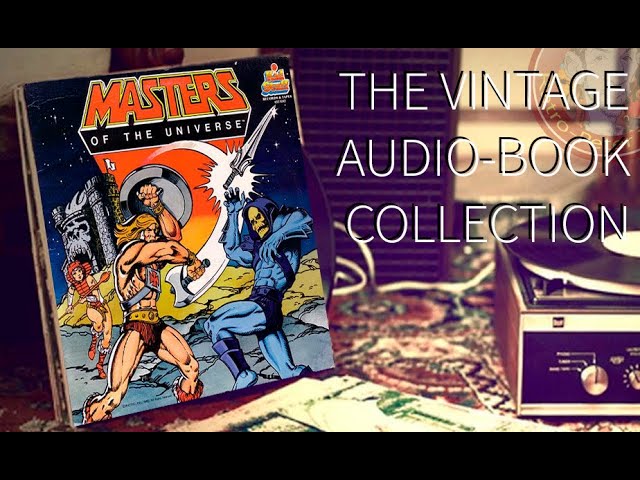
Other, lesser-known ancillary materials contributed to the MOTU lore. Kid’s Stuff Records made several story albums, most of which came out early on in the MOTU rollout. One of the first ones, which had a truly amazing (and very early ‘80s) theme song, was a weird transition between the mini-comics and what Filmation would produce. Cringer didn’t talk, and Adam said “By the power of Castle Grayskull!” twice. No “I have the power!” declaration just yet. These audio stories described Castle Grayskull as once having been the ancient Hall of Wisdom, transformed into the menacing Grayskull to protect the secrets of the universe. Skeletor’s homeworld is given a name, “Infinita,” something later discarded. Listening to this, one can tell they developed this before the TV series debuted.

The Masters of the Universe toyline essentially ended in 1987 after five years, after racking up billions for Mattel. No one knows why the toy sales fell off so badly at the end of the previous year, but one can hazard a guess. The last new episode of He-Man and the Masters of the Universe aired in late 1985. With nothing but reruns left, kids quickly moved on to other shows and toys. The total failure of the Masters of the Universe live-action film in 1987 didn’t help much either. Mattel canceled a planned Powers of Grayskull line of toys, featuring He-Man’s ancient predecessor He-Ro, despite some items making it to retail shelves.
The New Adventures of He-Man (Or “He-Man in Name Only’)

Mattel wasn’t willing to let its former cash cow die while TMNT ruled, however. They partnered with a different animation house for The New Adventures of He-Man in 1990. Technically a continuation of the Filmation cartoon, this show had a totally different animation style, produced in Asia. This 65-episode series took He-Man and Skeletor, now voiced by different actors, into space. The new series replaced the supporting cast entirely, and no more Eternia. The accompanying toyline had action figures in a different scale, and bore nearly no resemblance to classic MOTU. Many fans think of this as “He-Man in Name Only.” And its contributions to the lore were essentially ignored in later versions of the franchise. So its lasting contributions to overall MOTU lore are pretty much zero. But it’s at least worth mentioning.
Masters of the Universe 2002 Updates the Lore for the 21st Century

In 2002, Mattel relaunched the classic MOTU franchise for the 21st century, with a new toyline and cartoon. Named He-Man and the Masters of the Universe once again, this new series stuck very closely to the mythology of the old Filmation show, totally ignoring the 1990 show. While it was a reboot, it didn’t change much from what made the toys and ’80s cartoon popular. One big change was that Prince Adam looked like a scrawny kid who transformed into the adult and muscular He-Man. The old Filmation show had them looking identical, only with He-Man wearing fewer clothes and gaining a tan. In comparison, Superman’s glasses disguise looks genius. This show only lasted two seasons, but it left its own imprint on the mythology.
Skeletor’s Expanded Backstory Creates Family Ties with He-Man
Perhaps the biggest change to MOTU lore popularized by the 2002 series was solidifying Skeletor’s backstory. The 1982 mini-comics said Skeletor was an invader from “another dimension,” without getting too specific about what dimension that was. When Mattel began developing the mythology for She-Ra: Princess of Power, they came up with an early origin story for Skeletor. He seemingly came from the planet Etheria, where he was the pupil of Hordak, ruler of the Evil Horde, She-Ra’s primary enemy. When Hordak attacked Eternia when Prince Adam and his twin sister Adora were infants, Hordak kidnapped Adora, and abandoned Skeletor in Eternia. It was in Eternia that Skeletor set up shop, and took over Snake Mountain.

Had the original MOTU line continued, the Skeletor story would have taken a greater twist. One of the very last mini-comics released with a MOTU toy was “The Search for Keldor.” It was illustrated by future Batman: The Animated Series co-creator Bruce Timm. The comic told the story of King Randor’s missing brother Keldor who had vanished years earlier into another dimension, trying to unlock magical powers. This mini-comic broadly hinted that Keldor eventually became Skeletor. But once the toyline ended, they dropped the storyline for almost two decades.
The 2002 series decided to pick up that lost story thread, and officially make Keldor into the true identity of Skeletor. So He-Man’s greatest enemy was now his corrupted uncle. Had the 2002 series not ended prematurely, they would have explored how Keldor studied under Hordak, before an incident melted his skin and turned him into Skeletor. The Kevin Smith-produced Masters of the Universe: Revelation and Revolution continued this plot thread, with William Shatner playing Keldor, and Mark Hamill voicing him as Skeletor. So the main heroes of Star Trek and Star Wars now played the same version of the iconic villain.
The 2021 Masters of the Universe Netflix CGI Cartoon Changed Even More Lore

In 2021, Netfflix produced a CGI animated series also called He-Man and the Masters of the Universe, aimed directly at kids. The lore changed significantly again, although it was still recognizably MOTU in a way that the 1990 reboot was not. In this series, Adam was an amnesiac teenager separated from his royal family on Eternia, growing up with the Tiger Tribe. Many of the same iconic characters remained, like Man-At-Arms, Teela, and the Sorceress. Only now, they were way bulked up.
In the new take, Skeletor remained King Randor’s brother Keldor, and He-Man’s evil uncle. Young Prince Adam was also a very young kid, who magically becomes an adult. It seems these changes to the lore from the 2002 cartoon are here to stay. This Netflix series lasted only one full year with 26 episodes, running from 2021-2022. Ultimately, many felt it changed too much of the MOTU iconography, and both the cartoon and its accompanying toy line are seemingly forgotten already, a mere three years later.

The New Masters of the Universe Film Seems to Be Keeping Things (Mostly) Classic
Judging from the trailer, the upcoming Masters of the Universe live-action movie is making even more changes to the lore, while keeping things mostly old school. In Travis Knight’s upcoming film, Prince Adam is sent to Earth as a child, where he lives until adulthood. This premise is entirely new, not existing in any previous version. Although Adam growing up away from the place could be the influence of the 2021 Netflix series. But everything else looks very in keeping with the classic toys and cartoon shows. We imagine even some of the more obscure elements will appear in the film, even if only as Easter eggs. If the film is a success, this will all become the new canon for a generation of kids. The evolution of He-Man will continue into the next decade, and beyond.
Masters of the Universe hits theaters June 5, 2026.
This post has affiliate links, which means we may earn advertising money if you buy something. This doesn’t cost you anything extra, we just have to give you the heads up for legal reasons. Click away!