


A Knight of the Seven Kingdoms has so many Targaryens they’re finding more every episode. The show also has a whole lot of references to George R.R. Martin’s A Song of Ice and Fire. Here are all of the Easter eggs, terms, and lore from Game of Thrones, House of the Dragon, and the history of Westeros in A Knight of the Seven Kingdoms‘ fourth episode.
Trial of Seven

As seen on Game of Thrones, a normal Trial by Combat pits the accused (or their proxy/champion) against their accuser (or their proxy/champion) in a fight to the death. Rather than the ruling lord or lady serving as judge, the participants believe they are letting the “gods” decide. The winner determines guilt or innocence. No one has to die, though. If the accuser yields and withdraws their accusation, innocence is declared. A knight, even a lowly hedge knight, can never be denied a Trial by Combat. The tradition
A Trial of Seven works the same way, except instead of one-on-one battle, it’s seven knights against seven knights. The number of warriors on each side pays homage to the Seven, the faith of the Andals (who also brought knighthood to the Realm).
A Trial of Seven can end multiple ways. The first can happen before the fight even starts. Failure to find six warriors to join your cause results in an instant guilty verdict. That makes it a smart/gutless choice for a smug Prince guaranteed to have six teammates against a lowly hedge knight without a single known friend.

If each side has seven, the fastest way the trial can end is if the accused dies in battle. If that happens, it’s over immediately and all fighting stops. Those who chose to represent the accused are not guilty by association. (Knights can earn respect for partaking in a holy event. They can also win eternal fame, which is why Lord Lyonel made sure to join.) The trial also ends if an accusation is withdrawn. If that does not happen, the knight on trial and his side must slay his accuser.
Prince Maekar should definitely know about a Trial of Seven. It might be an ancient form of Trial by Combat, but one of his most infamous family members took place in the last one during a notorious era of House Targaryen. King Maegor the Cruel, the third person to sit on the Iron Throne, was the only survivor of the Realm’s last Trial of Seven. Maegor and his six knights fought against the Faith Militant, which had challenged his lawful right to rule.
Maegor is among the very worst of the Targaryen kings. On House of the Dragon, he was a comparison by those fearful of a potential King Daemon. Otto Hightower said, “Daemon would be a second Maegor or worse.” A Prince of House Targaryen, especially a warrior like Maekar, has no excuse not to know about a legendary event from his family’s history. Seriously, the King resides in “Maegor’s Holdfast’ in the Red Keep.
Knighthood

Lord Lyonel Baratheon knighted Raymun Fossoway so the former squire could fight on behalf of his new friend, Ser Duncan. The show treated the moment with the solemnity it deserves, because while few knights ever live up to their vows, the moment someone becomes a knight is sacred. Knighting is a holy act. (The North has few knights since they follow the old gods and not the Seven). It also instantly elevates someone, even if they were previously a lowborn squire to a hedge knight, into the nobility. All knights, most of whom served as squires as children/young men, earn the title Ser.
A king can knight anyone, even if the king themself is not a knight. Otherwise, only a knight can make a knight. They can knight anyone, as Jaime Lannister said on Game of Thrones right before he knighted Brienne.
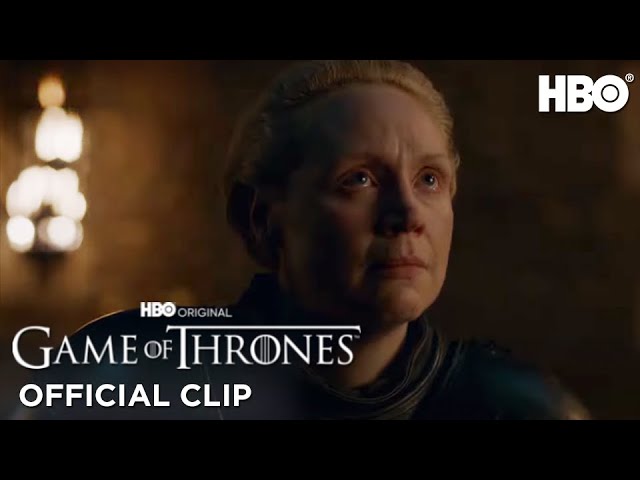

Both Jaime and Lyonel spoke the same (nearly identical) ancient vows when they knighted Brienne and Raymun. It’s done by touching the would-be knight, who kneels, on the shoulder with a sword. They then rise have sworn these vows:
In the name of the Warrior, I charge you to be brave.
In the name of the Father, I charge you to be just.
In the name of the Mother, I charge you to defend the young and innocent.
In the name of the Maid, I charge you to protect all women.
True Knights

Ser Duncan made reference to a knight’s vows as his defense for coming to Tanselle’s rescue. There’s no real argument against him. But while his actions seem beyond reproach, few knights, even noble ones who try to honor their sacred knighthood oath, ever truly live up to these vows. Sometimes it’s impossible since sacred oaths often conflict, like when Kingsguard Jaime Lannister killed the Mad King to save a million people.
Prince Baelor told his brother Maekar he was fighting for the hedge knight because Dunk had protected the innocent, “as every true knight must.” A true knight is exactly what Dunk was looking for when he pleaded with the lords of the Realm and asked if there were no true knights left in Westeros. The problem for Ser Duncan is that there have been few true knights ever.

A true knight is the ideal knight, a warrior who is the living embodiment of their sacred vows by living them in every way, always. But while few knights are ever considered true knights, a few have made their way to HBO. House of the Dragon‘s identical twin brothers, Ser Arryk Cargyll and Ser Erryk Cargyll, are remembered as true knights. As are Ser Gerold Hightower and Ser Arthur Dayne who both died protecting Lyanna Stark at the Tower of Joy on Game of Thrones, where Ser Barristant Selmy also proved himself a true knight. And Brienne of Tarth was a true knight even before Jaime dubbed her Ser.
Dragon Dreamers of House Targaryen

Another rare breed of the Realm are Dragon Dreamers. House Targaryen has a long and important history of family members who have prophetic dreams. The family only survived the Doom of Valyria because Daenys Targaryen foresaw the destruction of the Valyrian Freehold. Her father trusted her dream and moved House Targaryen to Dragonstone, where they soon became the last dragonlords in the world. Aegon the Conquerer only turned his gaze to Westeros after having a dream he dubbed a Song of Ice and Fire, a dream that foretold the return of the White Walkers. Maester Aemon (Egg’s brother) and Daenerys herself also have Dragon Dreams in George R.R. Martin’s novels.
A Knight of the Seven Kingdoms features another known Dragon Dreamer, Prince Daeron. As he told Dunk, his dreams “come true.” And here’s what he saw when he closed his eyes:
I have seen you, Ser. And a fire. And a dead dragon. A great beast, with wings so large they could cover this meadow. It had fallen on top of you. But you were alive, and the dragon was dead.
Daeron does not know what the dream actually means or if Duncan will kill the dragon. Because while House Targaryen might have a long and important history of prophetic dreams, even dreamers can’t always tell exactly what they mean.
Brute of Bracken

The large bearded man who “answered” Dunk’s call to action with flatulence is Ser Otho Bracken, better known as the Brute of Bracken. (If you didn’t watch A Knight of the Seven Kingdoms‘ fourth episode with closed captioning you probably didn’t hear a member of the crowd identify him by his nickname.) Before he made a mockery of the moment, those in attendance had reason to believe Ser Duncan had found a worthy warrior to join his cause.
Ser Otho earned his formidable “Brute” moniker after a previous tourney in King’s Landing three years prior. There, despite only using a blunted longaxe, he killed Lord Quentyn Blackwood. Ser Otho hit Quentyn so hard, he crushed the Lord’s helm and face. With that kind of raw power he would have made Ser Duncan’s side even more formidable.

Houses Bracken and Blackwood are very familiar to fans of House of the Dragon. The two old families have long been bitter blood rivals, warring with one another for centuries. During young Rhaenyra’s journey to find a mate, we saw a young Blackwood boy slay a Bracken son as Storm’s End. Many years later, Daemon Targaryen nearly lost support from the Riverlands after he let Ser Willem Blackwood brutalize House Bracken, which had aligned with Aegon and the Greens against Rhaenyra.
No matter the era, and no matter who ruled in Westeros, one thing was always true in the Realm: Blackwoods and Brackens hate each other. And that hatred is not just hot air, even if Ser Otho the Brute of Bracken was full of exactly that.
For more Game of Thrones Easter eggs from A Knight of the Seven Kingdoms, check out our full roundup here.
Mikey Walsh is a staff writer at Nerdist. He wants to talk to you more about true knights but he has to wait. You can follow him on Bluesky at @burgermike. And also anywhere someone is ranking the Targaryen kings.
This post has affiliate links, which means we may earn advertising money if you buy something. This doesn’t cost you anything extra, we just have to give you the heads up for legal reasons. Click away!