


A Knight of the Seven Kingdoms has a much higher bar to clear for me than it does most. I adore Dunk and Egg so much I refer to them as “my boys.” I’ve re-read George R.R. Martin’s three novellas and their accompanying graphic novels countless times. I’m obsessed with the lore and importance surrounding the duo’s partnership. And I haven’t exactly been a fan of HBO’s last few seasons of television set in Westeros. So if I were to like the newest Game of Thrones spinoff, it must mean it’s really good. But I don’t like it. I love it. It’s the series this fan-favorite duo deserves. And despite being so different from its predecessors, it’s the show that’s going to make disillusioned viewers remember why they loved Westeros.
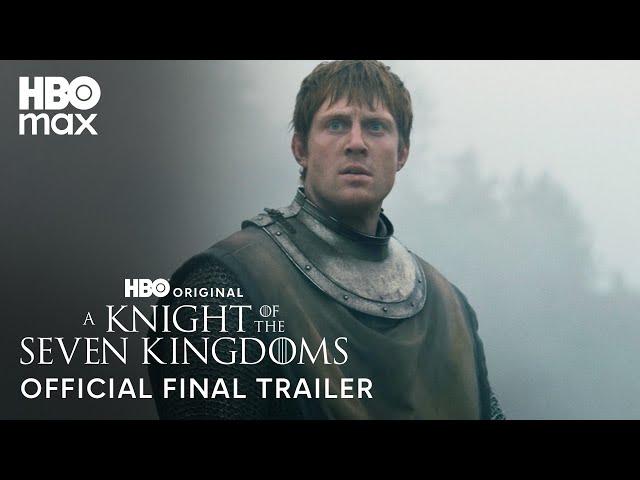

Martin’s Tales of Dunk and Egg are vastly different than his A Song of Ice and Fire novels. They’re small, intimate, self-contained, dragon-less stories about a famous knight and his squire that only follows a single point-of-view character (Ser Duncan the Tall). That’s exactly the feeling and scope co-creator and showrunner Ira Parker has captured with his series’ first season. It’s an incredibly faithful adaptation of the first Dunk and Egg novella, “The Hedge Knight.” It is both of this world and different from what we viewers have come to expect from its TV shows.
This story reveals how Egg came to serve as Ser Duncan’s squire. It begins with the large, naive, and honorable knight trying to compete at a tourney full of famous lords and warriors. Dunk’s personal quest for glory, respect, and a future takes a major detour after his inherent goodness gets him in trouble. But while the story includes important figures from famous, powerful families, including Princes of House Targaryen, Parker never forgets this is a tale that works because it eschews the scope and grandeur that make Game of Thrones and House of the Dragon feel so epic. Royalty might be present, but they are not the focus. This is a story rooted in the lives of the smallfolk just as much as it is rooted in highborn bullshit. (There’s a lot of actual shit in this show, too.)

The show’s scope and tone—which sometimes is more whimsical and base than the series’ two counterparts—doesn’t prevent it from maintaining the production value viewers have come to expect from HBO. A Knight of the Seven Kingdoms looks gorgeous and expensive. That’s as true on a stroll through the countryside as it is when we see a brutal jousting competition full of pageantry and violence where multiple knights ride horses at night at the exact same time in a fight that is both organized and wholly chaotic. The costumes and sets are just as good, though with most of the story set at the Tourney at Ashford, there’s less of both to enjoy. That doesn’t prevent you from feeling completely immersed back in the Realm. When each episode ended I was sad to leave.
The thing that made me happiest is that Peter Claffey and Dexter Sol Ansell could not be more perfect as Dunk and Egg. Claffey fundamentally understands Ser Duncan’s flaws and strengths, both of which make him such a wonderful character. He also conveys Dunk’s shortcomings, which include being a little goofy, awkward, and insecure, without making him into a total lunkhead. It’s the exact right balance and I couldn’t love his performance more.
The same is true of his counterpart. Young Sol Ansell gives the best kind of performance you can get from a child actor: he feels like a child. His Egg is smart, difficult, and brimming with anger, same as his written counterpart. But the young star captures all of that all while coming across as just a kid and not a tiny talented adult. Without his authentic innocence the relationship between Egg and Dunk wouldn’t work as well.

There are plenty of other standout performances in the show, too. Millions of people around the world are going to become Daniel Ings mega-fans overnight after the seem him as “The Laughing Storm,” Lyonel Baratheon. No one has more fun than him in season one. Few people have ever had more fun in Westeros. He’s chewing scenery, spitting it out, and then dancing on it, but without making Lyonel feel like a cartoon. He’s a big character who gets the big, scene-stealing performance he requires. The other side of that coin is Sam Spruell who plays Prince Maekar Targaryen. He’s a hard, stern man who unlike Lyonel would rather be literally anywhere else in the world. Spruell is so perfect, both in look and in performance, it feels like Martin used a time machine when he wrote the character and based Maekar on Spruell’s future performance.
Season one is also so short—just six episodes that mostly run in the 32-35 minute range—that it almost feels like Westeros’ version of a sports movie. (And as a gigantic sports movie fan, I mean that in the best way.) But episodes are still structured and feel like episodes. This is not a film arbitrarily cut up into a TV show. A Knight of the Seven Kingdoms is a TV show that will leave you feeling both satisfied at episode’s end and eager to tune in next week.

My only real issue, minus the physical appearance of one character who the show still gets mostly right otherwise, is that it employs one a frustrating storytelling device. It used an action-killing flashback. It’s not entirely indefensible. And the flashback itself does flesh out Dunk’s character in a way that is meaningful and interesting. It just would have worked better at a different time. Specifically a time where it wouldn’t have kill some incredible momentum and anticipation.
That 10-minute delay is my only real issue in an adaptation I personally care about. So yeah, A Knight of the Seven Kingdoms is basically everything I’d hoped for. More importantly, it will remind angry Game of Thrones fans why they loved Westeros in the first place. Because while this story might not involve dragons, it’s full of the kind of smart writing and rich character moments that made us love the original show to begin with. When Game of Thrones‘ was at its best, the spectacle served the story. A Knight of the Seven Kingdoms—which does have a lower ceiling that HBO’s two other adaptations because it’s not trying to be epic—doesn’t have much spectacle because that’s not what its story needs. It’s lack of spectacle is why it works. It’s like if the fireplace scene before the Battle of Winterfell was the basis for a whole show.
I love Dunk and Egg and always want people to learn exactly why. A Knight of the Seven Kingdoms is going to do exactly that.
Mikey Walsh is a staff writer at Nerdist. Never besmirch either Dunk or Egg in front of him. You can follow him on Bluesky at @burgermike. And also anywhere someone is ranking the Targaryen kings.