


The popular theory that Stranger Things will ultimately include time travel is not new; it certainly didn’t originate with Stranger Things 5. Show producer and director Shawn Levy said the show would reference Back to the Future in Stranger Things 3. And it did. A lot. Stranger Things 4 then used a grandfather clock as its symbol for an interdimensional demon who despises time itself and resides in a dark realm where time doesn’t run normally. A month before that season even premiered, I wrote the following about Stranger Things and trime travel in April 2022:
Combined with the Upside Down monster general talking about how “the time has come,” the show has left a trail of crumbs pointing to the introduction of time travel to Stranger Things. And that might be the only way to win this war. The best way to stop the Upside Down might be to go back and never open up a door to that world in the first place.
Now Stranger Things 5: Volume 1, both with its pop culture references and its own story, has once again raised the possibility that the only way forward for Hawkins, Indiana, is in the past. Yes, Stranger Things 5 once again teases the concept of time travel. Only this time the show has seemingly provided a way to do actually that. It’s a concept we can now see the show has been setting up since the start, because Stranger Things might use powerful electromagnetic waves and a wormhole to give us a Back to the Future ending.
Jump To:
- Wormholes and Time Travel in Stranger Things 5 , Volume 1
- “There’s A World Out There Where None of This Tragic Stuff Ever Happened”
- Vecna’s Strange Spire Creation, Wormholes, and Electromagnetic Waves on Stranger Things 5
- Electromagnetic Fields! Waves! Magnets! Science!
- Theoretical Concepts for Creating Wormholes With Electromagnetic Waves
- Vecna’s Hatred of Time Itself on Stranger Things
- The Weird Way Time Works (Or Doesn’t Work) in the Upside Down
- Vecna Will Use His 12 Kids to Add Stability to His Wormhole on Stranger Things , Allowing Him to Travel Through Time and Space
- Time Travel on Stranger Things : The Duffers Plans to Bring the Ending “Full Circle”
Wormholes and Time Travel in Stranger Things 5, Volume 1

Stranger Things has often used the boys’ beloved science teacher, Mr. Clarke, as a way to introduce scientific concepts and historical parallels important to the show. The series has also employed him as a form of clever foreshadowing. That’s why Mr. Clarke’s one appearance in Stranger Things 5′s first batch of episodes is important. Of all the countless lessons Mr. Clarke could have been teaching when we see him in Stranger Things 5, Volume, at the exact moment of his appearance, he was lecturing about wormholes.
He told Erica’s class in Stranger Things 5, “Wormholes are neat because they allow matter to travel between galaxies or dimensions without crossing the space between.” Neat, for sure, Mr. Clarke. But it’s what he said next about how you could use a wormhole that really stood out. Mr. Clarke made sure to note in Stranger Things 5, Volume 1: “Just think of all the places mankind could go. Another galaxy. Another time, even.”
The mere mention of “another time” during this curiously timed science lesson is enough to set off alarm bells. But this Stranger Things 5 mention of how wormholes might allow for time travel takes on even more meaning in the context of something Mr. Clarke said in season one of the series.
“There’s A World Out There Where None of This Tragic Stuff Ever Happened”
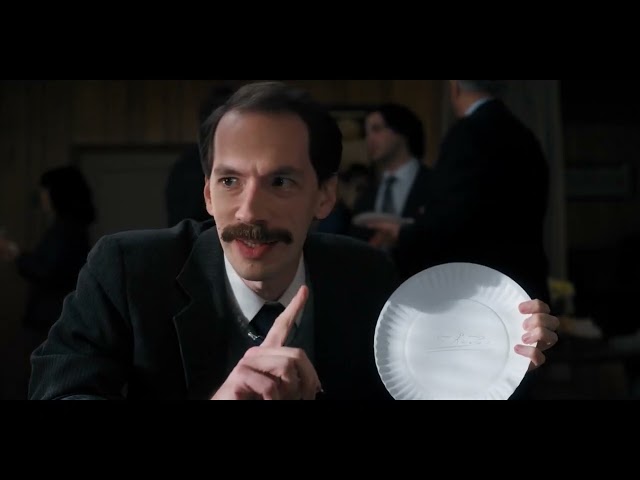

After Will’s funeral in season one, the boys asked their teacher about the “theoretical” existence of other dimensions and how to travel to them. Mr. Clarke answered by telling them about “The Flea and the Acrobat,” a scientific concept so important to the show that it gave the episode its name. Part of his answer included the problem with a) opening a portal and b) what would happen if a portal did exist.
To open one, Mr. Clarke shared on Stranger Things (emphasis ours), “You’d have to create a massive amount of energy, more than humans are currently capable of creating, mind you, to open up some kind of tear in time and space, and then… you create a doorway.” And, if one were opened, “It would disrupt gravity, the magnetic field, our environment. Heck, it might even swallow us up whole.”
The boys already knew a portal existed. What no one knew until Stranger Things 4 was that Vecna could open portals by killing someone. That created enough energy to open doorways between dimensions. Four murders let him open a giant rift right through Hawkins.

Now, after the beginning of the final season, it’s something else Mr. Clarke said that day that feels even more relevant. Before he got into the hard science of time, matter, and space in his answer, Mr. Clarke explained what the existence of infinite parallel universes would represent on Stranger Things. He said, “There’s a world out there where none of this tragic stuff ever happened.”
That’s a beautiful thought, but as Mr. Clarke said at the end of that scene, “Science is neat, but I’m afraid it’s not very forgiving.” Even if such a world exists, you’d still need a way to get there. But, now, on Stranger Things 5, we’ve seen Vecna might have built one using a scientific concept that has long been important on the show.
Vecna’s Strange Spire Creation, Wormholes, and Electromagnetic Waves on Stranger Things 5

Stranger Things 5 introduced one of the show’s weirdest concepts yet. When Will tapped into the Upside Down’s central hive mind he saw something “important” Vecna didn’t want Will to see. It was a sprawling, oval-esque creation made up of 12 spires all centered around a symbol that looks like the Boy Scout insignia from Henry Creel’s youth. Each spire has/will have a child attached to it. Will saw Holly and the three kids Vecna had already taken attached to the spires with vines down their throats. Will said Holly “became a part of it somehow, like it was doing something to her.”
Vecna’s spire-creation certainly seems related to the strange flesh wall that forms an impenetrable circle around the Upside Down, it lives inside it after all. We know Vecna took Holly through the flesh wall to get to the spire-sanctuary. We also saw that Eleven can’t get past the flesh walls with her powers, nor can she even see Holly through them, though all signs point to Holly’s physical body being trapped in there.
Henry Creel is also obsessed with time, and, on Stranger Things 5, his spire creation has 12 spots like a clock. Like Lucas, we don’t believe in coincidences anymore. But none of that tells us what the flesh wall actually is on Stranger Things’ final season, or how it’s connected to the spire creation, the possibility of time travel, or anything else. That is, unless Stranger Things has been telling us exactly what it is and how Vecna will use it all along.
Some viewers think Mr. Clarke’s drawing of the wormhole looks like Vecna’s weird spire creation. But have others have noted the spire—which in some ways resembles a drawing of the Mind Flayer—looks a lot more like a different scientific concept. In Stranger Things 5, Vecna’s mysterious creation looks like electromagnetic waves.
And if there’s one thing Stranger Things loves to talk about, it’s electromagnetism.
Electromagnetic Fields! Waves! Magnets! Science!
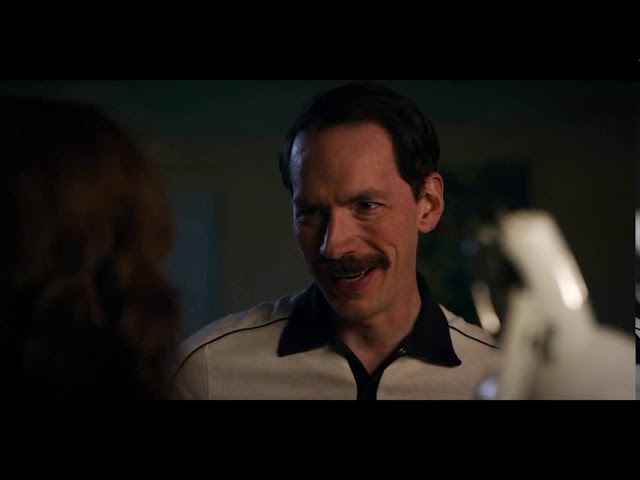
Mr. Clarke first explained why any theoretical pathway between a dark parallel dimension and the real world would disrupt the magnetic field. That’s exactly what happened with the Mothergate at Hawkins Lab, the first portal between worlds that is now the center of the flesh wall. But his students (and viewers) aren’t the only people Mr. Clarke has taught about electromagnetic fields. In season three, Mr. Clarke also explained all about them to a flummoxed Joyce Byers when she asked him why her magnets kept falling off her fridge. That was a major plot point of Stranger Things 3.
Electromagnetic waves and electromagnetism, which have also been mentioned at other points on the show, have been a significant part of the Stranger Things story from the very start. It’s a story that is very much a sci-fi fantasy, one rooted in complex scientific concepts and theories often explained in simple terms by Mr. Clarke. And, it turns out, all of Mr. Clarke’s lessons on Stranger Things are starting to converge; there are real scientific theories that tie electromagnetic waves directly to wormholes.
Theoretical Concepts for Creating Wormholes With Electromagnetic Waves

I am sorry to disappoint you, but I am not a theoretical physicist. I’m not even a nice, mustachioed science teacher in Hawkins, Indiana. That’s why I’ll let this paper, “A Magnetic Wormhole,” published by Jordi Prat-Camps, Carles Navau & Alvaro Sanchez in Nature, speak for itself. It explains how to theoretically “build a wormhole for electromagnetic waves.”
This theoretical “magnetostatic wormhole” is not necessarily what Vecna is trying to do. There’s no way to know just yet how Vecna might possibly use electromagnetic waves to create a wormhole or travel/time travel through one on Stranger Things. That’s not exactly what this paper proposes anyway. What it does prove is that there are real scientific theories that combine wormholes and electromagnetic waves, and real science has always been important to Stranger Things‘ Upside Down.
Now, on Stranger Things 5, Mr. Clarke has explained that a wormhole could allow matter to travel not just between places but between parts of time itself… a.k.a that wormholes could allow us to time travel. And if there’s one sure-fire way to defeat Vecna, it’s by using the one thing he hates the most: time.
Jump To:
- Wormholes and Time Travel in Stranger Things 5 , Volume 1
- “There’s A World Out There Where None of This Tragic Stuff Ever Happened”
- Vecna’s Strange Spire Creation, Wormholes, and Electromagnetic Waves on Stranger Things 5
- Electromagnetic Fields! Waves! Magnets! Science!
- Theoretical Concepts for Creating Wormholes With Electromagnetic Waves
- Vecna’s Hatred of Time Itself on Stranger Things
- The Weird Way Time Works (Or Doesn’t Work) in the Upside Down
- Vecna Will Use His 12 Kids to Add Stability to His Wormhole on Stranger Things , Allowing Him to Travel Through Time and Space
- Time Travel on Stranger Things : The Duffers Plans to Bring the Ending “Full Circle”
Vecna’s Hatred of Time Itself on Stranger Things

One told Eleven in Stranger Things 4 that his hatred for humanity was rooted in his hatred of time itself.
You see, humans are a unique type of pest, multiplying and poisoning our world, all while enforcing a structure of their own. A deeply unnatural structure. Where others saw order, I saw a straitjacket. A cruel, oppressive world dictated by made-up rules. Seconds, minutes, hours, days, weeks, months, years, decades. Each life a faded, lesser copy of the one before. Wake up, eat, work, sleep, reproduce, and die. Everyone is just waiting. Waiting for it all to be over. All while performing in a silly, terrible play, day after day. I could not do that. I could not close off my mind and join in the madness. I could not pretend. And I realized I didn’t have to.
When Eleven opened a portal between her world and the Upside Down, Vecna finally had a way back into the real world. Thanks to Will and the Mind Flyer, he was then able to stalk the minds of his prey. On Stranger Things 4, Vecna used his powers to mock his victims with a symbol of time itself, the grandfather clock from his childhood home in Hawkins.

It was yet another reminder that Vecna—like so many great villains in history whose main struggle is against time and the inevitable death it brings—wants to live in a world untouched by humanity’s “straightjacket.” That’s why Vecna built his own world outside of time.
The Weird Way Time Works (Or Doesn’t Work) in the Upside Down
Eleven did not banish One to the Upside Down. She banished him to a parallel world, which we know is called Dimension X, because of the Stranger Things stage play. One said that realm was “unspoiled” by mankind,” which he equates to time itself. In that yellow-hued place, he found demogorgons and other creatures who have since haunted Hawkins. He also encountered the Mind Flayer (for a second time, as the play revealed), which he said allowed him to fulfill his potential. Only then did he create the Upside Down, which remains his own dimension wholly under his control.
On Stranger Things, time does not exist in the Upside Down. At least not in the way it does in the real world. The first human Vecna ever took into his dark mirror domain—which we’ve now seen is closed off by a circular flesh wall around the Upside Down Hawkins—was Will Byers. And that exact moment he took Will, on the night of November 6, 1983, is the exact moment in time that all of the Upside Down now exists in. Nancy discovered that strange fact years later when she was in the Upside Down.

“Time” in the Upside Down is a single snapshot from the exact moment a human arrived. But time is exactly what Vecna doesn’t want to exist at all. He told Eleven he wants to reshape the world, and that will mean the elimination of time everywhere.
How can he do that? By turning all worlds into his own. And since there are three worlds he’s inhabited in his existence, we might already know exactly why he took Holly Wheeler and the other kids.
Vecna Will Use His 12 Kids to Add Stability to His Wormhole on Stranger Things, Allowing Him to Travel Through Time and Space

Mr. Clarke’s Stranger Things 5 lesson to Erica’s class on wormholes and time travel ended with an explanation about the obvious problem with the entire concept. “If wormholes did exist, they would be extraordinarily unstable,” Mr. Clarke said. “Their enormous gravitational force would rip them apart at the very moment they formed.” Power/energy has always been a central issue on Stranger Things.
In season one, Mr. Clarke told the boys humans couldn’t generate enough energy to open a portal to another dimension. Except Eleven did exactly that. Meanwhile, Vecna tore a rift through all of Hawkins after he killed four victims. Their deaths created the energy he required. But a wormhole, especially one that could be used to travel through multiple worlds and time, is different from a single interdimensional doorway. It might need a very different kind of power. And a lot of it.
On Stranger Things, a stable wormhole that cuts through Dimension X, the Upside Down, the real world, and time itself might just require the creation of a clock-like apparatus powered by twelve children.

Vecna murdered four people to open a single door between dimensions. But, like with Will years ago, he didn’t kill Holly and her eleven classmates. He befriended them first. He then put Holly’s mind in a happy memory full of food and music to keep her happy while he physically attached her body to the inside of his flesh wall. The vines currently connecting those kids to the wall are “changing” them, according to Will.
Changing them how? Or, maybe more importantly, changing them to what? Generals? Monsters? Maybe, for sure. But what if Vecna’s really turning them into powerful batteries on Stranger Things 5, the kind that could stabilize an otherwise massive, unstable wormhole? The kind that would allow Vecna to make good on Mr. Clarke’s fear from season one when he said a pathway between worlds could “swallow us up whole?”

That might be exactly what Vecna has planned, the “beautiful” thing he told Will they would do together. In Stranger Things‘ final season, Vecna might be using his own, human-powered electromagnetic field to create a wormhole big enough to consume both the real world and Dimension X into his Upside Down. He would then be able to reshape and rule all existence, free of people and time, for all eternity.
If this is what Stranger Things has planned it has been laying the foundation every season since the show began. That’s exactly why Stranger Things might also be setting up an ending that involves something it has teased for years, too: time travel.
Time Travel on Stranger Things: The Duffers Plans to Bring the Ending “Full Circle”

Before Stranger Things 5 premiered, the Duffer Brothers said they wanted to bring their story full circle, back to the beginning. Season five began that way, with a flashback to Will’s first encounter with Vecna in the Upside Down. Volume 1 then featured more overt references to Back to the Future (on a show that has also made many references to the Terminator movies…). Stranger Things 5 also tied its story directly to A Wrinkle in Time, which ends with the main characters returning from their successful fight against the ultimate darkness to the exact moment they embarked on it.
That’s a lot of time travel connections for Stranger Things, a series where the very concept of “time” is at the center of its main villain’s story. And time travel might be exactly how the Duffers plan to resolve their homage-filled show and bring Stranger Things to its ending. Vecna’s wormhole could backfire. It could allow Eleven and the others to stop this war before it even started. She could make sure young Henry Creel never went to Dimension X in the first place, ensuring no one ever died because of the Mind Flayer. Or Eleven could stop herself from ever opening up a portal to the Upside Down in the first place. That would at least keep Hawkins safe from its many tragedies.

The problem is that a time travel type-ending could undo everything that happened on Stranger Things. It would be like everything we saw never actually mattered. Some might like that, but many would find it totally unfulfilling if not downright infuriating. Fortunately, that’s the kind of end the Duffers have said they would never do. But that’s not the kind of ending we got in either of Stranger Things 5‘s biggest reference points, A Wrinkle in Time or Back to the Future, anyway.
Marty McFly’s trip through time rewrote his life in Back to the Future. He returned to the present to find a loving, happy, successful family. But while no one else in Hill Valley remembered how things had been before Doc Brown’s DeLorean, Marty remembered everything. Everything that happened to him mattered. It mattered to him, to Doc, and to Jennifer. It even mattered to everyone else, even if they didn’t know it. Those events were real, forever, even when the world, the past, the present, and the future changed forever.

If everyone who has fought Vecna and the Upside Down goes through a wormhole to win their war against darkness before it begins, they can come out on the other side like Marty, remembering everything. Then the events of Stranger Things would have always happened to them and for us, even if time travel enters into the equation. Only Barb, Bob, Benny, Billy, Chrissy, Eddie, the Creel family, and everyone else who died because of Vecna will now be alive on Stranger Things.
A Back to the Future ending would make Stranger Things come “full circle.” A circle has no start or end, after all. It would also be a fitting ending to a show that loves the ’80s. Just as it would make good on Mr. Clarke’s beautiful idea in season one that somewhere out there exists a world where none of these tragedies ever happened.
Wormholes? Electromagnetic waves? Time travel? Real science in sci-fi? A grand homage to one of the ’80s best, most important, most beloved films? And a Stranger Things series finale titled “The Rightside Up?” Great Scott, indeed.
Jump To:
- Wormholes and Time Travel in Stranger Things 5 , Volume 1
- “There’s A World Out There Where None of This Tragic Stuff Ever Happened”
- Vecna’s Strange Spire Creation, Wormholes, and Electromagnetic Waves on Stranger Things 5
- Electromagnetic Fields! Waves! Magnets! Science!
- Theoretical Concepts for Creating Wormholes With Electromagnetic Waves
- Vecna’s Hatred of Time Itself on Stranger Things
- The Weird Way Time Works (Or Doesn’t Work) in the Upside Down
- Vecna Will Use His 12 Kids to Add Stability to His Wormhole on Stranger Things , Allowing Him to Travel Through Time and Space
- Time Travel on Stranger Things : The Duffers Plans to Bring the Ending “Full Circle”
Mikey Walsh is a staff writer at Nerdist forever running up that hill. (Or…down that hill?) You can follow him on Bluesky at @burgermike. And also anywhere someone is ranking the Targaryen kings.