


With a live-action Clayface movie directed by James Watkins finally on the way, one of Batman’s most visually striking villains is stepping into the spotlight. On the surface, this is the prime opportunity for DC to embrace full-scale body horror in 2026. But what makes this project truly timely isn’t just the creature effects. It’s the psychological fragility of the man beneath the mud that makes Clayface perfect for the world we are in right now.
There are Batman villains that audiences fear. Then there are the ones they pity. Few characters embody that tragedy quite like Clayface. Over the years, critics and fans alike have increasingly viewed him as one of Gotham’s most sympathetic villains, with outlets like ComicBook.com even ranking him among Batman’s most tragic rogues.
Batman: The Animated Series understood that distinction better than almost any superhero adaptation ever made. Long before comic book films became obsessed with “gritty realism” or trauma as shorthand for character development, the series recognized something deeply unsettling about villains who weren’t born evil but emotionally collapsed into it. Few episodes captured that tragedy more effectively than “Feat of Clay Pt. 1 & 2” (Season 1, Episodes 20 and 21) with the introduction of Matt Hagen’s Clayface.
As a kid, I didn’t fully understand why those episodes affected me so deeply. I just knew they felt different. This wasn’t a villain chasing power or chaos for the sake of destruction. Clayface was suffering in real time. Beneath the shape-shifting and monstrous transformations was a man terrified of becoming irrelevant, of no longer living up to the image people expected from him as a Hollywood star.
By the end of the final confrontation with Batman, I honestly almost cried. I felt bad for someone I was supposed to hate. Even now, revisiting the episodes as an adult, they resonate even more deeply after experiencing personal growth, shortcomings, and the ongoing process of figuring out my own identity.
In a time when job security feels increasingly fragile, and people are constantly being forced to reinvent their careers, identities, and sense of self, the emotional complexity of a live-action Clayface film arriving now feels unexpectedly perfect.
Clayface Was Always More Than a Monster
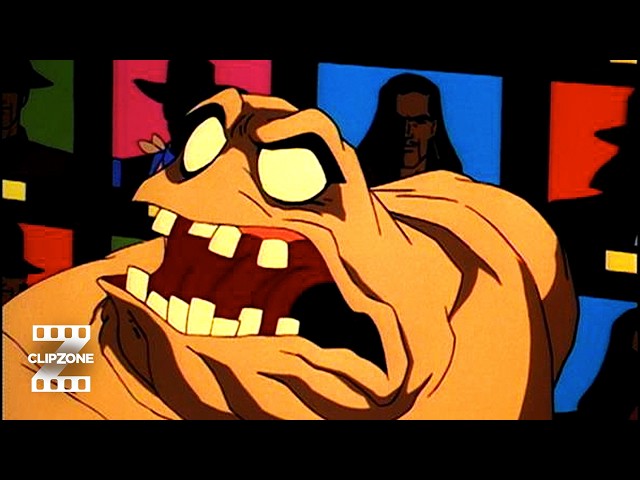

One of the reasons Clayface has endured across comics, animation, and video games is that the character taps into something very scary: the ability to transform into anyone or anything. His powers are grotesque, but they’re also psychologically invasive. He could become your family member, your lover, or even someone who traumatized you as a kid. But he is also trying to find a way back to humanity, going through changes that make him relatable.
Matt Hagen’s version of Clayface in Batman: The Animated Series wasn’t just a criminal transformed into a monster. He was an actor whose career, face, and sense of self were slipping away. Addiction, vanity, insecurity, and desperation consumed him long before the mutation did. That distinction matters.
A less generous interpretation of Clayface reduces him to a visual-effects showcase. But the best versions understand the horror begins long before his body melts. It starts with a man who cannot accept being forgotten.

That feels especially relevant now, as modern culture increasingly encourages people to treat themselves as performances. Social media has turned identity into something curated, edited, optimized, and constantly maintained. Everyone is managing a version of themselves for public consumption. We filter our faces, monitor engagement, and build digital personas that sometimes feel more “real” than our actual lives.
Clayface embodies the nightmare version of that pressure. In a culture where public perception can shift instantly, one moment you are celebrated; the next, you are criticized, discarded, or demonetized. For some, that pressure can lead to desperation, emotional instability, or a fractured sense of identity.
Even Kai Cenat recently encouraged streamers to prioritize their mental health during the 2025 Streamer Awards, a reminder that living in the spotlight can take a serious emotional toll. Clayface represents the most horrifying version of that reality. He literally loses the ability to distinguish who he truly is underneath the masks.
Body Horror Has Finally Become Mainstream Again
There was a time when a Clayface movie probably would’ve been treated as too strange, too grotesque, or too niche for mainstream audiences. That’s no longer true. Modern horror audiences are far more willing to embrace stories that use physical transformation as emotional storytelling. Films inspired by the legacy of David Cronenberg have found renewed cultural relevance because body horror now feels emotionally recognizable instead of purely shocking
Movies like Together and Academy Award-winning The Substance proved audiences are interested in horror stories where the body becomes a reflection of psychological instability, social pressure, or fractured identity. Transformation itself becomes trauma.
That framework fits Clayface perfectly. His mutations shouldn’t simply exist to look disturbing. They should externalize emotional collapse. Every distorted face, melting feature, or unstable transformation should feel connected to Matt Hagen’s desperation to remain lovable, desirable, and relevant. In many ways, Clayface is the ideal comic book villain for the current horror renaissance because his story naturally exists between superhero tragedy and existential horror.
Batman’s Most Human Villains Deserve Human Stories

One of the strengths of Batman stories is that many of his villains reflect emotional wounds instead of pure evil. Well, almost all of them. The Joker is still largely just bat-sh*t crazy, pun intended. Mr. Freeze represents grief weaponized into obsession. Two-Face is psychological fragmentation turned physical. The Riddler often embodies insecurity and validation-seeking spiraling into narcissism. But Clayface may be the most emotionally vulnerable of them all. Underneath the horror is someone begging to be loved despite no longer recognizing himself.
That’s why “Feat of Clay” remains one of the most devastating stories in Batman: The Animated Series history. The episodes made it clear that Clayface’s greatest fear wasn’t Batman. It was abandonment, rejection, and becoming unrecognizable to himself and everyone around him.
The tragedy only deepened in the follow-up episode, “Mudslide,” where Clayface returns to find a cure to restore himself with the help of Doctor Stella Bates, as he begins to physically fall apart. What makes this episode so heartbreaking is watching his desperate desire to be somewhat human again. It’s the one time I actually wanted Batman to just leave him alone so he could have that chance.
But perhaps we can’t even look at Clayface without remembering the stolen innocence of Annie in The New Batman Adventures (Season 1, Episode 8, “Growing Pains”). Annie was a sentient scout formed from Clayface’s own body, an “extension” that developed its own soul and formed a genuine bond with Tim Drake’s Robin.
Annie represents the innocent part of Clayface that still exists beneath the monster, mirroring the child in many of us that gets consumed by the demands and mutations of adulthood. When Clayface eventually reabsorbs Annie, it becomes one of the character’s most heartbreaking moments. In his desperation to feel whole again, he destroys the last innocent and pure part of himself.
DC Has an Opportunity to Do Something Truly Different

A solo film finally has the opportunity to fully immerse itself in that sadness rather than reducing Clayface to just another brute-force villain. And from the early footage released so far, it already feels like actor Tom Rhys Harries understands the assignment, capturing the emotional pain and instability.
And honestly, this arrives at the perfect time. Comic book cinema currently feels caught between reinvention and exhaustion amid conversations around superhero fatigue. Audiences still love these characters, but many viewers are searching for stories willing to take emotional and tonal risks.
If DC embraces the psychological horror and emotional sadness at the center of Matt Hagen’s story, they could create one of the most haunting comic book films in years.
That’s what stayed with me after watching Batman: The Animated Series as a kid. Not the action or the monster design, but the pain and the deep storytelling. Now, years later, Clayface feels even more recognizable. In a world where people constantly reshape themselves for approval and attention, he no longer feels like an exaggerated comic book villain. He feels like the horror of becoming invisible in a world obsessed with being seen.